What is a community toilet scheme?
A community toilet scheme is an arrangement in which a council or town pays local businesses, such as cafés, pubs and shops, or helps with their costs, to let anyone use their toilets without buying anything. UK councils run them, and in Germany, Austria and Switzerland more than 400 towns and municipalities take part in a network called Die Nette Toilette. In our UK data, 934 toilets are listed as part of a scheme, 60% of them in London; see public toilets in London for the boroughs.
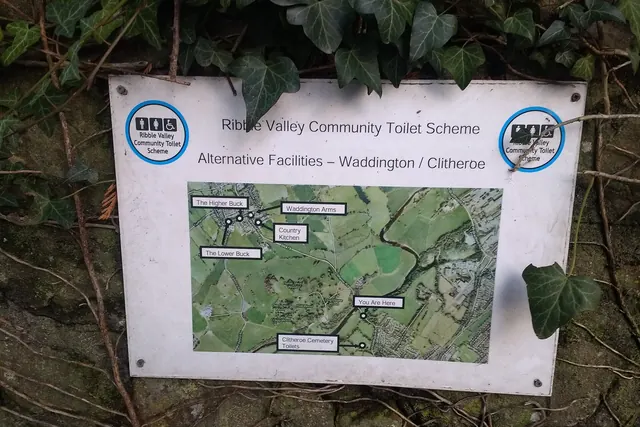
How a scheme works
- The council or town invites businesses in an area to join.
- Each member agrees to let the public use its toilets during opening hours, without having to buy anything.
- The business puts a sticker in its window or on its door and keeps the toilets clean.
- The council pays a fee or helps with costs, and may list the members on its website, a map or an app.
- If people report a problem with a member's toilet, the council can take it up with the business.
What a business receives differs from place to place. Three examples, from the councils' own pages:
- Richmond upon Thames, London, pays each member between £800 and £1,000 a year, plus VAT, based on the number of days its toilet is open to the public. The council said in December 2024 that its scheme had grown to more than 70 locations.
- Dortmund, Germany: the scheme is run by a local association, StadtbezirksMarketing Dortmund. Each business taking part receives €100 a month, net, and the aim is around 120 nette Toiletten across the city.
- Basel, Switzerland: the canton of Basel-Stadt pays each business CHF 2,500 a year for opening its toilets.
How to spot a member
Look for a sticker in the window or on the door. Walk in, and either head to the toilets or ask a member of staff where they are; you do not need to buy anything or explain why.
- In the UK, each council has its own sticker. On our council area pages, a scheme toilet's name or notes mention the scheme.
- In Germany, Austria and Switzerland, the Nette Toilette sticker on the door also shows what the toilet has, such as step-free access or a baby changing table. The network's free app finds the nearest one.
- In Basel, the sticker is at the entrance, and the Nette Toilette app lists the locations and their opening hours.
A scheme toilet is only open when the business is. Cafés may close mid-afternoon, and some businesses close on Sundays. On a UK area page, use the Open now button before you set off.
Where the schemes are
United Kingdom
In our UK data, 934 toilets mention a community toilet or comfort scheme in their name or notes, across 103 council areas with a page. 564 of them are in London. The real number may be higher, because a scheme toilet is only counted here if its record mentions the scheme.
| Council area | Scheme toilets |
|---|---|
| Tower Hamlets | of 134 toilets |
| Hounslow | of 119 toilets |
| Edinburgh | of 123 toilets |
| Richmond upon Thames | of 131 toilets |
| City of London | of 86 toilets |
| Waltham Forest | of 60 toilets |
| Bristol | of 204 toilets |
| Bromley | of 97 toilets |
| Lewisham | of 68 toilets |
| Moray | of 56 toilets |
| Lambeth | of 97 toilets |
| Brighton and Hove | of 112 toilets |
| Portsmouth | of 71 toilets |
| Ealing | of 36 toilets |
| Newham | of 53 toilets |
Where scheme toilets make up a large share of an area's list, the Free and Open now buttons on its page matter more than usual.
Germany
Die Nette Toilette's website says more than 400 towns and municipalities in Germany, Austria and Switzerland take part. Member cafés, restaurants and shops let anyone use their toilet free, with no need to buy anything, and the towns support them financially with the upkeep. Each town decides whether to join, so coverage varies: check the town's own website or the app. See public toilets in Germany.
Switzerland
Basel Tourismus and the canton's construction and transport department launched Basel's Nette Toilette on 9 May 2018, with 31 restaurants and shops. The canton says the scheme lets passers-by use the toilets of selected cafés, restaurants and shops without buying anything, alongside more than 93 free public toilets in the city. In our OpenStreetMap snapshot of Basel, 24 of the 264 toilets mapped within 8 km of the centre mention the Nette Toilette, as it stood on 17 November 2026. See public toilets in Basel.
Austria
The City of Salzburg lists its nette Toiletten on its public toilets page: businesses and other places whose toilets you may use without buying anything. The city helps with the extra cleaning costs. See public toilets in Austria.
Japan
Yokohama tested the idea in the 2023 financial year: two Lawson convenience stores took part in a trial of "public toilet cooperating stores", marked with a sticker at the entrance. The city lists the trial as ended. See public toilets in Japan.
Where the idea came from
The London Borough of Richmond upon Thames says it first launched its community toilet scheme in 2004. In 2008 the Department for Communities and Local Government published guidance on community toilet schemes for councils, with Richmond's scheme as one of its two examples. In Scotland, the Highland Council runs a similar Highland Comfort Scheme.
A scheme can add toilets where the council does not run its own. Read whether councils have to provide public toilets for the UK law behind that.
What works and what doesn't
The advantages
- More toilets, in the places where people shop and eat.
- The council does not have to build or staff a toilet block. Die Nette Toilette puts the cost of building a new public toilet at over €220,000.
The drawbacks
- Opening hours follow the business, so a scheme toilet may not be open early in the morning or late at night.
- Some people feel awkward walking into a pub or café without buying anything.
- Businesses can leave schemes, and stickers and lists may not be updated.
- Toilets may be upstairs or down a narrow corridor, and may not be accessible.
Accessibility
Not every scheme toilet is accessible. Some councils record whether each member has an accessible toilet or baby changing; on our UK area pages, those facts appear on each toilet, and the Wheelchair accessible button keeps only toilets recorded as accessible. The Nette Toilette sticker shows whether a toilet is step-free or has a changing table. If you need an accessible toilet, a key for locked accessible toilets, such as the RADAR key in the UK, opens toilets that do not depend on a business being open.
For businesses
If your council runs a scheme, its website should explain how to join and what it pays. You may be asked to keep your toilets clean, let the public use them during your opening hours, display the sticker, and tell the council if anything changes. It is worth telling staff about the scheme, so nobody is turned away by mistake.
Die Nette Toilette does not take businesses one by one: if your town takes part, contact the town; if it does not, you can ask the town to join.
Asking for a scheme where you live
If your council does not run a scheme, ask your local councillor whether it would consider one, especially if toilets are closing. Point to schemes in nearby areas, and to local businesses that would be willing to join. In England, town and parish councils also have a power to provide toilets, so ask them too. In Germany, Austria and Switzerland, a town has to register with Die Nette Toilette itself, so the town hall is the place to ask.
What a member business agrees to
Each council runs its scheme its own way, but the agreement may ask a business to:
- Let anyone use its toilet during opening hours, without having to buy anything.
- Show the scheme sticker in the window or by the door, so people know they are welcome.
- Keep the toilet clean, stocked with soap and paper, and in working order.
- Tell the council if its opening hours change or the toilet is out of use.
- Say whether it has an accessible toilet or baby changing, so the council can list it.
In return the council pays a fee or helps with costs, and may list the business on its website or a map.
Using a community toilet
Walk in, and if the toilet is not clearly signed, ask a member of staff where it is. You do not need to explain why or buy anything. Remember that a pub, café or shop is still someone's workplace: the toilet may be upstairs or through the back, and it may be busy at lunchtime. A quick thank you on the way out is always welcome.
If a member business refuses to let you use its toilet, tell the council that runs the scheme, so it can follow it up. Richmond upon Thames, for example, says it will contact the business about your concern. Our guide to finding a toilet fast lists other places to try.
Common questions
Do I have to buy something to use a community toilet?
No. That is the point of a scheme: member businesses let the public use their toilets during opening hours without buying anything, and the council or town pays them or helps with their costs. Die Nette Toilette in Germany, Austria and Switzerland and Basel's scheme both say so explicitly.
How do I know if a business is in a scheme?
Look for the scheme sticker in the window or by the door. Your council's website may list members or show them on a map, Die Nette Toilette has a free app, and our UK area pages include toilets recorded as part of a scheme.
Who pays for a community toilet scheme?
Usually the council or town. Richmond upon Thames pays each business between £800 and £1,000 a year, plus VAT, depending on how many days its toilet is open to the public, and the canton of Basel-Stadt pays CHF 2,500 a year. In Dortmund, where a local association runs the scheme, each business receives €100 a month, net. The Highland Comfort Scheme helps businesses with their running costs.
What is Die Nette Toilette?
A network in Germany, Austria and Switzerland in which cafés, restaurants and shops let anyone use their toilet free, without buying anything, with financial support from the town. A sticker on the door shows the toilet's facilities, and the network says more than 400 towns and municipalities take part.
What if a member business refuses to let me in?
Tell the council that runs the scheme. Members agree to let the public use their toilet, and Richmond upon Thames, for example, says it will contact the business about your concern.