Can you catch anything from a toilet seat?
You cannot catch a sexually transmitted infection such as genital herpes from a toilet seat, the NHS says. Stomach bugs like norovirus are different: they spread from surfaces, including seats, handles and taps, to your hands and then your mouth, so washing your hands with soap and water is what protects you, wherever you are. If you would rather find a well-kept toilet in the first place, the public toilet map shows the nearest ones.
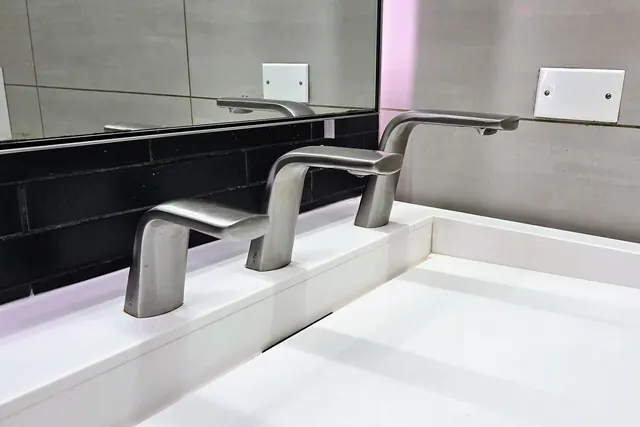
The toilet seat
Toilet seats look like the obvious danger. For sexually transmitted infections, they are not. The NHS says you cannot get genital herpes from a toilet seat, because it needs skin-to-skin contact, and it describes infections such as chlamydia and gonorrhoea as spread through vaginal fluid and semen, mainly during sex.
Stomach bugs are different. Norovirus spreads when people touch a surface or object that has the virus on it and then touch their mouth, and the NHS lists toilet seats among the surfaces to clean when someone has it. That is one more reason to wash your hands with soap and water after every visit. If a seat is visibly wet or soiled, wipe it with toilet paper or use another cubicle.
Where germs really are
When someone has norovirus, the NHS advises cleaning toilet seats, flush handles, taps and bathroom door handles. In a public toilet, many hands touch the same things: the door handle and lock, the flush, the taps and the soap dispenser. Germs on your hands then reach your face, your food and your phone.
- Use your elbow or a piece of paper towel on the door handle when you leave, if there is one.
- Toilets with automatic taps, soap and doors reduce the number of surfaces you touch.
- Put bags on a hook rather than the floor.
Flushing
Flushing throws a plume of tiny droplets into the air. In a 2022 laboratory study of a lidless public-style toilet, the plume reached about 1.5 metres within 8 seconds of the flush. Closing a lid, where there is one, may help less than people think: a study published in 2023 found that closing the lid did not reduce how much virus reached the surfaces around the toilet. So flush, step out of the cubicle rather than leaning over the bowl, and wash your hands.
Washing and drying your hands
Washing your hands with soap and water after using the toilet is the first thing the NHS advises to stop norovirus spreading, and the US Centers for Disease Control and Prevention (CDC) lists after using the toilet among the key times to wash. Their advice on how to do it is much the same:
- Wet your hands with water and put on enough soap to cover them.
- Rub your palms together, then the backs of your hands, between your fingers, your thumbs and your fingertips.
- Keep going for around 20 seconds, about as long as singing “Happy Birthday” twice, the NHS says. The CDC says to scrub for at least 20 seconds.
- Rinse off the soap with water.
- Dry your hands fully with a disposable towel, and use the towel to turn off the tap.
The World Health Organization's hand hygiene leaflet, written for health workers, also says to wash with soap and water after using the toilet, and puts the whole wash, from wetting your hands to drying them, at 40 to 60 seconds.
Drying matters: the CDC says germs pass more easily to and from wet hands. If there are no towels, keep using the dryer until your hands are completely dry rather than wiping them on your clothes.
When there is no soap
Carry a small bottle of alcohol hand gel for toilets where the soap has run out or the water does not work. The CDC recommends a hand sanitiser with at least 60% alcohol when soap and water are not available. But the NHS says alcohol hand gels do not kill norovirus, the winter vomiting bug, so wash with soap and water as soon as you can.
Paper: in the toilet or in the bin
In many places, used toilet paper goes in the toilet, and only toilet paper. Thames Water, in England, asks people to flush only pee, poo and paper. In Japan, the Japan Sanitary Equipment Industry Association says to leave toilet paper in the bowl and flush it, and to put sanitary pads and tampons in the bin beside the toilet. In South Korea, rules that took effect on 1 January 2018 removed the bins from beside the toilets in public toilets, the interior ministry said, so used paper goes in the toilet; women's toilets keep a bin for sanitary products.
Some toilets are different. You may find a small bin beside the toilet and a sign asking you not to flush paper. If a sign asks you to use the bin, do: put used paper in the bin, close the lid if it has one, and wash your hands as usual. If you are not sure, ask the staff where you are staying.
If the toilet is one you squat over, as you may find in Japan and India, read how to use a squat toilet.
Hovering and seat covers
Many people hover over the seat rather than sit on it. Pelvic health physiotherapists advise against it. The Pelvic, Obstetric and Gynaecological Physiotherapy network says hovering over a toilet is not a good way to pass urine, and advises sitting down, taking your time and relaxing, because the pelvic floor muscles need to relax for the bladder to empty. If the seat looks dirty, wipe it with toilet paper first, or use another cubicle.
If a paper seat cover or a layer of toilet paper makes you more comfortable, use one, and wash your hands afterwards as usual. To compare packs you can carry, see the best toilet seat covers.
Your phone
If you use your phone in the toilet, it picks up whatever is on your hands, and you then hold it to your face. Leave it in your pocket or bag until you have washed your hands, and wipe it from time to time with a cleaning wipe that is safe for screens.
Stomach bugs
Norovirus, also called the winter vomiting bug, causes vomiting and diarrhoea. The NHS says it spreads through close contact with someone who has it, through food they have prepared or handled, and from surfaces: you touch something with the virus on it, then your mouth. If you have it, the NHS advises not going to work, school or nursery until you have not been sick or had diarrhoea for 2 days. If someone at home has it, clean toilet seats, flush handles, taps and bathroom door handles, and wash soiled clothes and bedding separately on a 60°C wash.
When travelling, the same rules apply. In countries with poor sanitation, UK travel health advice is not to drink tap water or brush your teeth with it unless it has been treated, and to wash your hands with soap and clean water after the toilet. Keep hand gel with you for when there is nowhere to wash.
Choosing a toilet
- Check there is soap and a way to dry your hands before you need them.
- Toilets with automatic taps, soap dispensers and doors mean fewer surfaces to touch.
- If a toilet is out of soap or blocked, try another nearby rather than making do.
On our UK council area pages, each toilet shows its opening hours and any notes the council has added, such as whether it is staffed. Our city pages elsewhere list the toilets OpenStreetMap volunteers have mapped, with the facts they have recorded. For where to look when you are out, read how to find a toilet fast, and to see what you might pay for a staffed toilet, read how much public toilets cost.
Hand dryers or paper towels
Whichever you use, dry your hands fully, because germs pass more easily to and from wet hands. The NHS advice is to dry them with a disposable towel. In one laboratory study, published in 2014, jet air dryers spread more bacteria into the air around them than warm air dryers or paper towels, and paper towels spread the least.
If you use a dryer, keep going until your hands are completely dry, or finish off with a tissue.
Periods and sanitary bins
Use the sanitary bin for pads, tampons and their wrappers, and for nappies when there is no nappy bin. Do not flush them, or wet wipes, even those labelled flushable. Thames Water, in England, asks people to flush only pee, poo and toilet paper, and lists period products among the things that should not go down the toilet, because anything else can block pipes, drains and sewers.
In the UK, Prostate Cancer UK's Boys Need Bins campaign says men who use pads, stoma bags or other continence products are told to use the accessible toilet to find a sanitary bin, and it is asking for a bin in every men's toilet. If a toilet you use has no bin, tell the venue or whoever runs the toilet.
Public toilet etiquette
- Flush every time, and check the bowl before you leave; flush again if you need to.
- Put the seat down if you lifted it, and wipe it if you splashed it.
- Leave the basin and floor as you would want to find them.
- Report a blocked toilet, an empty soap dispenser or a broken lock to staff or the number on the door.
- Use the accessible toilet only if you need it, and do not use it to change clothes or to make a phone call.
- In a queue, let someone who is clearly desperate, or with a small child, go first if you can.
Common questions
Can you catch an infection from a toilet seat?
Not a sexually transmitted infection such as genital herpes: the NHS says you cannot get it from toilet seats, because it needs skin-to-skin contact. Stomach bugs are different. Norovirus spreads when you touch a surface that has the virus on it and then touch your mouth, and the NHS lists toilet seats, flush handles, taps and door handles among the things to clean. Washing your hands with soap and water is what protects you.
Should I close the lid before flushing?
You can, but do not rely on it. A study published in 2023 found that closing the lid did not reduce how much virus reached the surfaces around the toilet. Many public toilets have no lid anyway, so flush, step away from the bowl and wash your hands afterwards.
How long should I wash my hands for?
The NHS says to rub your soapy hands together for around 20 seconds, about as long as singing Happy Birthday twice, and the US CDC says to scrub for at least 20 seconds. Cover your palms, the backs of your hands, between your fingers, your thumbs and your fingertips, then rinse and dry them fully. The World Health Organization puts the whole wash, from wetting to drying, at 40 to 60 seconds.
Can I flush toilet paper everywhere?
Not everywhere. Thames Water in England, the Japanese sanitary industry and South Korea's interior ministry all say used toilet paper goes in the toilet. But some toilets have a bin beside them and a sign asking you not to flush paper. If a sign asks you to use the bin, do.
Can I flush wet wipes?
No, not even wipes labelled flushable. Thames Water, in England, asks people to flush only pee, poo and toilet paper, because anything else can block pipes, drains and sewers. Put wipes, pads and tampons in the bin.