How to empty a cassette or chemical toilet
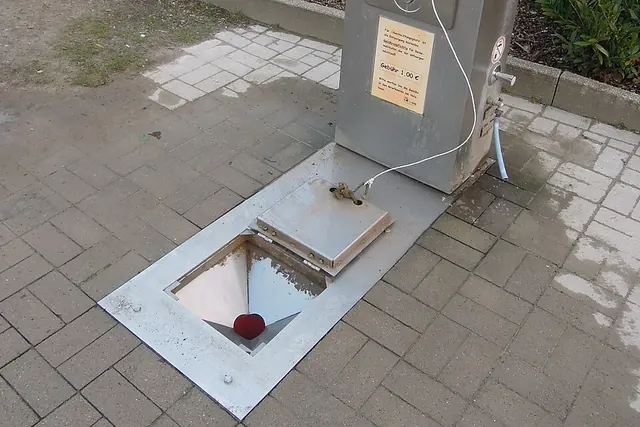
Empty a cassette or portable toilet only at a chemical disposal point (an Elsan point in the UK, a dump station or dump point in the US and Australia), or into a toilet on the mains sewer where that is allowed. Never use a grey water drain, a street drain, open water or the ground. Take the cap off with the spout pointing up, then point it down low over the drain and hold the vent button as you pour.
The short answer
A chemical toilet keeps its waste in a sealed tank: a cassette that slides out through a door in the side of a motorhome, campervan or caravan, or the bottom half of a portable toilet. Thetford and Dometic, who make the toilets in this guide, agree on where it goes. Thetford's Porta Potti manual says that emptying is only allowed at an authorised waste dump. Dometic's cassette toilet manual says to empty only at a designated disposal point, and its portable toilet manual says never to empty the tank into the environment.
- When: when the level indicator says full. Thetford's indicators turn red; Dometic's CT 4000 cassettes should be emptied as soon as possible once the display shows 75%.
- How often: Thetford's UK help pages say a tank treated with its products lasts 4 to 5 days with Blue and 3 to 4 days with Green, or until it starts to smell. Its US pages say every 3 to 5 days.
- Where: a chemical disposal point, or a toilet on the mains sewer where you are allowed to use it.
- Never: grey water points, surface or street drains, rivers, lakes, the sea or the ground.
Still choosing a toilet? How easy it is to empty is one of the biggest differences between the two kinds. See cassette toilet vs portable toilet, and the best portable camping toilets for models with level indicators and tank sizes side by side.
Where you can empty it
A chemical disposal point. Campsites and caravan parks usually have one: a drain or hopper set aside for toilet waste, often with a tap for rinsing. In the UK it is called a CDP or an Elsan point; in the US, Canada and Australia, a dump station or dump point. In England, the government's waste guidance notes that most permanent campsites and caravan sites usually have a chemical toilet disposal point. Thetford's guide to its portable toilets says to carry the tank to the dump station on the campsite.
On the water. On the canals and rivers of England and Wales, the Canal & River Trust says boaters with cassette toilets use its Elsan sanitary facilities, of which it lists about 220, as well as marinas and boatyards. In the US, Dometic's manual for its 970 series portable toilets says that the MSD versions, when permanently installed in a boat, count as US Coast Guard Type III holding-tank systems, emptied at dockside pump-out stations or more than 3 miles offshore in coastal waters.
A toilet on the mains sewer. Thetford says that if no dump station is available, a regular toilet connected to the sewer will do, and that you can empty it at home if your toilet is on the sewer. Dometic's manual also allows a normal toilet. The Camping and Caravanning Club agrees for homes on mains sewerage, but warns that a septic tank is a problem (see chemicals and septic tanks). A public toilet is a different matter. In Scotland, joint guidance from SEPA, the Highland Council and Scottish Water asks site operators to put up signs in their toilets saying campervan waste must never be emptied there, so only use one if it says you may.
In the US and Australia, the rules are set locally. Oregon's environment department lists the approved ways for RV waste: a sanitary sewer where allowed, an authorised dump station, a licensed pumper, or a septic system with permission. In Australia, EPA Tasmania says dump points are found at council sites and caravan parks, and that blackwater should go nowhere other than a designated dump point.
Where you must never empty it
Scotland's environment agency, SEPA, puts it plainly: you must never dispose of chemical toilet waste into a burn, river, loch, surface drain or the sea, or onto the ground. The same rule makes sense anywhere.
- Grey water points. The Camping and Caravanning Club and the Scottish guidance both say never to empty chemical waste at a grey water point, the drain for washing-up and shower water. It may not be built to take sewage.
- Street, car park and yard drains. In the UK, Water UK says outdoor drains carry rainwater only, usually straight to the nearest river or stream.
- Near fresh water. The Club says never to empty a cassette near fresh water, and the Canal & River Trust says never to pour urine into a canal.
- The ground. In England, burying waste from a portable toilet needs a registered D3 waste exemption from the Environment Agency. It allows up to 1 cubic metre (35 cubic feet) in 12 months, only where the toilet was used, and not within 10 metres (33 feet) of a watercourse or 50 metres (164 feet) of a spring, well or borehole. The government adds that in most cases it is better to use a foul sewer, and says new rules are planned from January 2027, subject to Parliament. In Oregon, even grey water may not go on the ground.
At the disposal point itself, put in only what the toilet is for. The Canal & River Trust's Elsan guidelines allow human waste, toilet tissue and a small amount of chemical, and no wipes, nappies (diapers) or sanitary products. Boaters with a pump-out tank should never pump it into an Elsan.
Step by step
These steps follow the Thetford Porta Potti and cassette guides and Dometic's 970 series and CT 4000 manuals. Check the manual for your own toilet: the buttons and catches differ between models.
- Close the blade. Thetford says to close the valve between bowl and tank fully after each use. Do not travel with the tank more than three-quarters full.
- Take the tank out. On a cassette toilet, open the service door outside the vehicle and pull the cassette out; most have a handle and wheels. On a portable toilet, undo the catch (on a Dometic 970, pull up the rear latch) and lift the top half off.
- Carry it upright to the disposal point. Dometic says not to shake a cassette hard or hang it on a bicycle.
- Turn the spout up and take off the cap. Put the cap somewhere it cannot roll into the drain. The Canal & River Trust says caps falling into the pipework are the most common cause of blocked Elsans.
- Point the spout down, low over the drain, and hold the vent button. Thetford says to press and hold the vent button with your thumb as you pour, to stop splashing. On a Dometic 970, open the pressure relief valve on top.
- Rinse. Add clean water, swill it round and empty again. On the canals, bring your own hose for this, kept apart from the one you use for drinking water.
- Get it ready for next time. Refit the cap, add the waste-tank additive and enough water to cover the bottom of the tank, and put the tank back.
- Wash your hands. The NHS says to wash with soap and water for around 20 seconds.
For the additive, the amount depends on the product and the tank. Our guide to the best toilet chemicals compares liquids, sachets and tablets, and says which are sold as safe for septic tanks.
Cleaning and storing the tank
Rinsing after each emptying is enough most of the time. Beyond that, the makers ask for a few things.
- No household cleaners or bleach. Thetford says household cleaners damage the seals, and the Camping and Caravanning Club says not to use domestic bleach. Dometic says not to use a pressure washer or chlorine or alcohol cleaners on its cassette toilets: use a mild, colourless detergent.
- Descale now and then. Thetford suggests its Duo Tank Cleaner two or three times a year: 200 ml (6.8 US fl oz) in the empty tank with 5 litres (1.3 US gallons) of lukewarm water, shaken, left for at least 16 hours, then emptied and rinsed.
- Look after the seals. Thetford says to use a seal lubricant, never Vaseline or vegetable oil, and to replace the lip seal of a cassette after 4 to 6 years. Dometic says to grease the seals of its cassettes with silicone grease monthly if used often, or after every 3 to 5 emptyings.
- Store it empty, clean and dry. Thetford says to empty both tanks, then leave the blade open and the caps loose.
- Watch for frost. Both makers say to drain the toilet if it could freeze. Dometic says not to put antifreeze in its cassette toilets; for its 970 series it allows only non-toxic drinking-water antifreeze, never alcohol-based or car antifreeze.
Chemicals and septic tanks
Many disposal points do not drain to a town sewer. The Canal & River Trust says many of its Elsans do not, and the Scottish guidance says small septic tanks, including public ones, are easily upset because toilet chemicals harm the treatment process. In the US, Oregon's environment department says RV waste is stronger than household sewage and treatment chemicals may harm a home septic system, and a 1999 alert from the US EPA warned that formaldehyde can kill the bacteria a septic system relies on.
That leads to three habits:
- Use no more than the dose on the bottle. The EPA alert and the Canal & River Trust both ask for the smallest amount that works.
- Where a site asks for green chemicals, use them. The Camping and Caravanning Club says blue chemicals used to contain formaldehyde but rarely do now, and that some campsites still ask for green.
- If you empty at home onto a septic tank, choose a product its maker sells as septic-tank safe, or empty somewhere else.
Which products say they are safe for septic tanks, and which are formaldehyde-free, is set out product by product in the best toilet chemicals.
Finding a disposal point
Start with where you are staying: ask the campsite, caravan park or marina, or look on its site map. On the move, a few sources help.
- UK canals and rivers: the Canal & River Trust lists its sanitary facilities, and says it is fitting new Elsans with rinse taps from early 2027.
- Australia: the National Public Toilet Map, funded by the Australian Government, covers more than 23,000 facilities and can show dump points.
- Anywhere: OpenStreetMap mappers tag disposal points as
amenity=sanitary_dump_station, with a separate tag saying whether a cassette can be emptied there, and apps built on OpenStreetMap can show them.
Our toilet map shows public toilets for you to use, not disposal points for the tank. Do not empty a cassette into a public toilet unless a sign says you may. If you are deciding between toilets, the easier one to empty often wins: compare the Thetford Porta Potti and the Dometic 970 side by side.
Common questions
What is an Elsan point?
Elsan point is the common UK name for a chemical disposal point (CDP): a drain on a campsite, marina or canal bank made for emptying cassette and portable toilets. In North America and Australia the same thing is usually called a dump station or dump point.
Can I empty a chemical toilet into a normal toilet?
Thetford and Dometic both say a toilet connected to the sewer will do if there is no disposal point, and the Camping and Caravanning Club says emptying at home is fine on mains sewerage but a problem with a septic tank. Do not use a public toilet unless it says you may: guidance in Scotland asks sites to put up signs saying campervan waste must never be emptied in their toilets.
How often do you need to empty a cassette toilet?
When its level indicator says so: Thetford says empty when the indicator turns red, and Dometic says to empty its CT 4000 cassettes as soon as possible once the display shows 75%. Thetford adds that with its additives a tank lasts 4 to 5 days with Blue products and 3 to 4 days with Green, or until it starts to smell.
Can I empty a chemical toilet at a grey water point?
No. The Camping and Caravanning Club and guidance from Scotland's environment agency both say never to empty chemical toilet waste at a grey water point. Grey water drains may not be built to take sewage or toilet chemicals.
Can I bury chemical toilet waste?
Not as a matter of course. In England, burying waste from a portable toilet needs a registered D3 waste exemption from the Environment Agency, with limits on amount and distance from water, and the government says that in most cases it is better to use a foul sewer. In Scotland, SEPA says never to put chemical toilet waste onto the ground.